We’re building modern reuse systems so producers, hospitality groups, & households keep bottles in circulation locally, at their highest value. Stay tuned.
Reuse represents the highest potential value for glass—but it only works when containers are kept intact and protected.

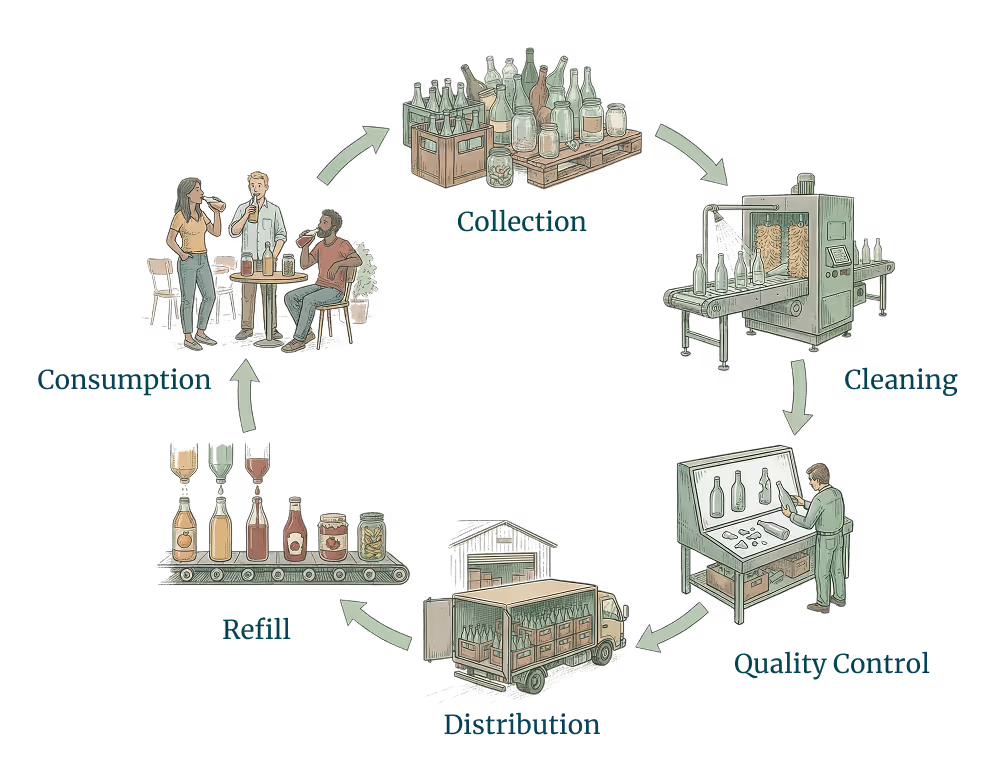
Cullet is developing reuse systems designed around this principle—helping businesses and communities understand how separation at the source makes reuse possible while strengthening local economies through regional reuse infrastructure.
Glass containers collected separately can be safely cleaned, inspected, and returned to the supply chain rather than crushed and melted down after a single use. Over time, professionally operated washing and quality-control systems can enable bottles and containers to be reused multiple times—dramatically reducing energy use and emissions.
In many ways, this is a return to the days of old. Long before single-use packaging, the milkman model proved that local delivery, collection, washing, and reuse could operate reliably at scale. Cullet is modernizing that same closed-loop system with today’s technology, safety standards, and logistics—

Standardized bottle formats

Reverse logistics & collection

Automated washing lines

Quality inspection systems

Food-grade sanitation controls

Tracking & inventory technology
Reuse plays a critical role in eliminating single-use plastics. Unlike plastic, glass does not shed microplastics, degrade with heat, or leach chemicals into its contents. As concerns grow around microplastic consumption and long-term human health impacts, glass offers a proven, inert, and safe alternative for food, beverages, pharmaceuticals, and personal care products.
Beyond sustainability, glass preserves quality. It protects flavor, carbonation, freshness, and potency better than plastic, extending shelf life while maintaining the integrity of what’s inside.
Reuse offers brands a visible and credible sustainability story, lowers lifecycle impacts, reduces packaging costs over time, and aligns with emerging reuse and waste regulations.
Just as importantly, reuse helps educate consumers by making sustainability tangible—turning everyday behavior into participation in a circular system.

Beer

Dairy products

Grocery & food producers

Hospitality groups

Spirits

Sustainability-driven brands

Water

Wine